The Good
Plenty of ancestries - and they're optional. The author made the bold decision to only include Human as an ancestry in the player book. They also designed a ton of other ancestries, but put them in a separate book. I like this. I don't see it as a money grab. I appreciate that the GM is now invited to pick and choose which ancestries will be playable in their campaign, without players just assuming that it is a free for all. I do this because it helps enforce a strong theme for the campaign (e.g. to only offer Fey related ancestries for a Fey game). Along with the goblins, elves, dwarves, tieflings (cambions) and other non-human ancestries, it has a lot of weirder options too, like harpies, tatterdemalions (abandoned clothing people?), haren (rabbit people), centaurs, etc. I don't think I'll ever use those in my games, but the variety is wonderful.
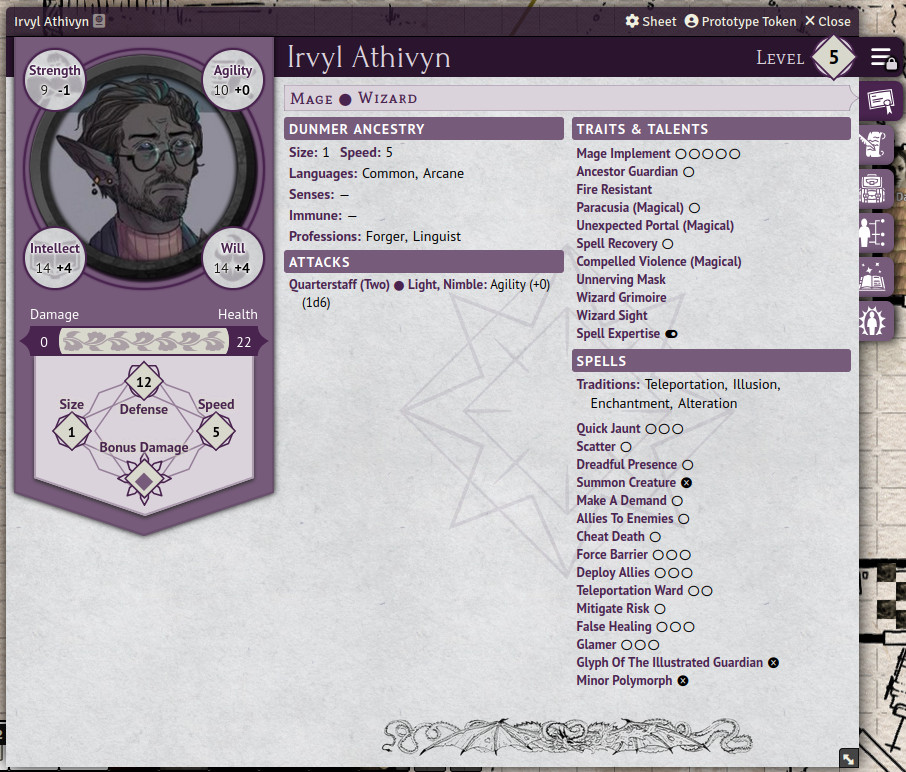
Magic is fun and powerful. The spells themselves are vivid and powerful. Frequently a scene changed dramatically when a mage dropped a spell that shocked and excited fellow players. Many spells do not allow enemies a saving throw, and require no roll from the caster to succeed. They just work. And well! Coming from playing Pathfinder 2e, the power level of magic spells between these two rpg systems really gave me whiplash. Sometimes a Weird Wizard Novice rank spell, available to a level 1 character, feels equivalent to a level 3 or 4 spell in Pathfinder. For example, the Unexpected Portal talent (like a cantrip, can be used as often as the mage likes) from the Teleportation tradition was used to great effect by our mage. It's like D&D's Misty Step, but you cast it on enemies. Think how powerful, tactically, that is. It is a cantrip in Weird Wizard. Our party created a bottleneck in a dungeon corridor; the enemies clustered around the bottleneck. Then our mage used Unexpected Portal in successive rounds to teleport (no saving throw) enemies one-by-one into a killzone for the rest of the party to dogpile. These spells are great fun and create a lot of laughs around the table.
Fighting characters have options. The warrior characters are not short shrift. As they level up, they earn Bonus Damage. I don't like the name of this ability; it should rather be called Combat Points. You can use them to give extra damage dice to your attacks, yes. But you can also use them to buy a second attack or various maneuvers like Disarm. So your warrior characters have points that refresh each turn for them to spend on doing cool stuff, or if they want, to do big pools of damage.
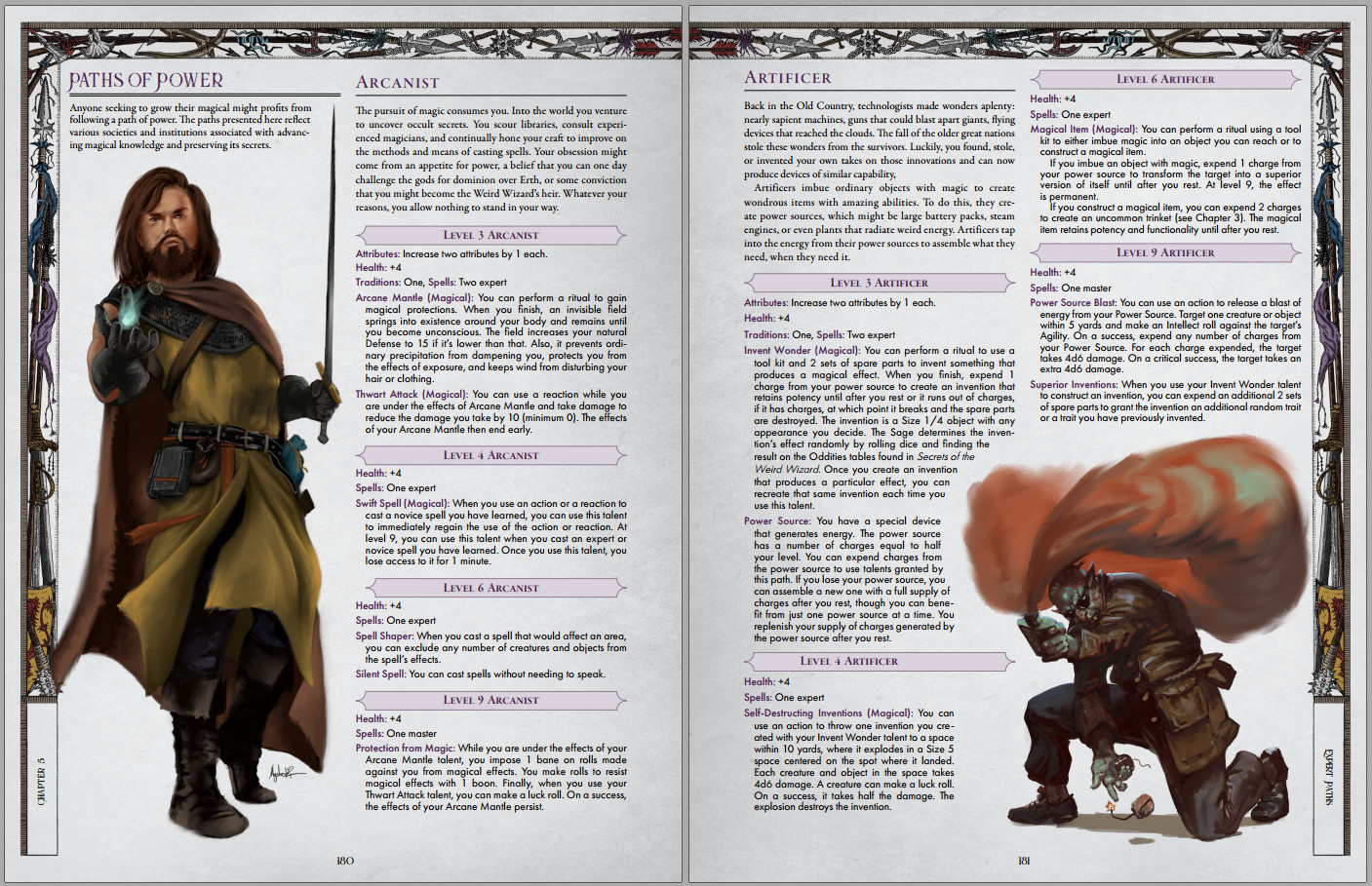
Magic allows specialisation. If you play a spellcasting character, you will choose a handful of Traditions that you know. Each Tradition is a theme of magic, such as Pyromancy, Enchantment, Necromancy, etc. There are 33 of them (a lot!) and each Tradition has 18 spells. So there is plenty of variety, and the spells encourage creative use. I find this really good - it means that your magic using characters will have a flavour all of their own. And even when you have played a mage before, there is replayability. If you played a cryomancer with time magic before, you can play a symbolist with alchemy and technomagic next time.
Good bestiary. A wide variety of monsters are provided in the GM's book. Many are important staples that a GM needs to be able to call upon, such as various types of undead warrior. You have all those, naturally, and they are important because they make it easy to use the game system in a homebrew setting. The bestiary also includes a good collection of faeries and unique weird creatures that are peculiar to the setting.
Lucks Ends is a cooldown. Some abilities for PCs and monsters can be used once, and then refresh when Luck Ends. This means that at the end of each round, you flip a coin (roll 1d20, beat 10) and on a success, the ability is back and available to be used again. I find this really random in a fun way. The probability is just enough that you feel like there is a good chance of it happening, but it's not reliable, and you still fist bump when it happens.
Lots of adventures, and more coming. The author has a rigorous publishing pace, and at one stage a new adventure was coming out every two weeks. They're okay. Some of them would be better if they included maps, and many of them are solidly grounded in the default setting of the Borderlands.
Great initiative system. Monsters go first, unless players choose to give up their Reaction and go first. This gives a little tactical trade off for the players to think about every round. Your Reaction is useful, for example it can be spent to Dodge and give enemies a slight penalty to their attack. It is also used to trigger many of the special abilities your character has. So giving up your Reaction to go first feels like a real tactical decision.
PCs feel powerful early. Your PCs will feel competent and powerful against other human enemies around level 3. By level 4 they are taking on vampires and ogres routinely. In fact, a Vampire is rated a Difficulty 8 creature, which is appropriate for a level 1 party. However, with low hit point pools and high damage output, there remains tension in battle and the players can be quite squishy. Their ability to Take The Initiative and act before monsters is important because often you do *not* want to be receiving an attack from an enemy.
Boons and Banes are easy to use. You want to climb the wall? Well, it's slippery and raining so that's 1 Bane. But you have the Sailor profession and spent time climbing the rigging, so that's 1 Boon. They offset each other, so make your roll. Boons give +1d6 and Banes give -1d6 to your roll. In practice they matter very little. The 1d20 is the biggest determinant of success.
Downtime activities are provided. I liked this, and we used them in every campaign I ran. They're flexible enough for our needs, and quick to run.