The Good
Concise book. The whole book is 178 pages, which includes all player information, a collection of monsters, and a collection of templates for a GM who needs to improvise an adventure. They can save space because spells do not need to be individually documented.
Core game is free. The free version is almost complete (140 pages). I love it when the publishers use this model.
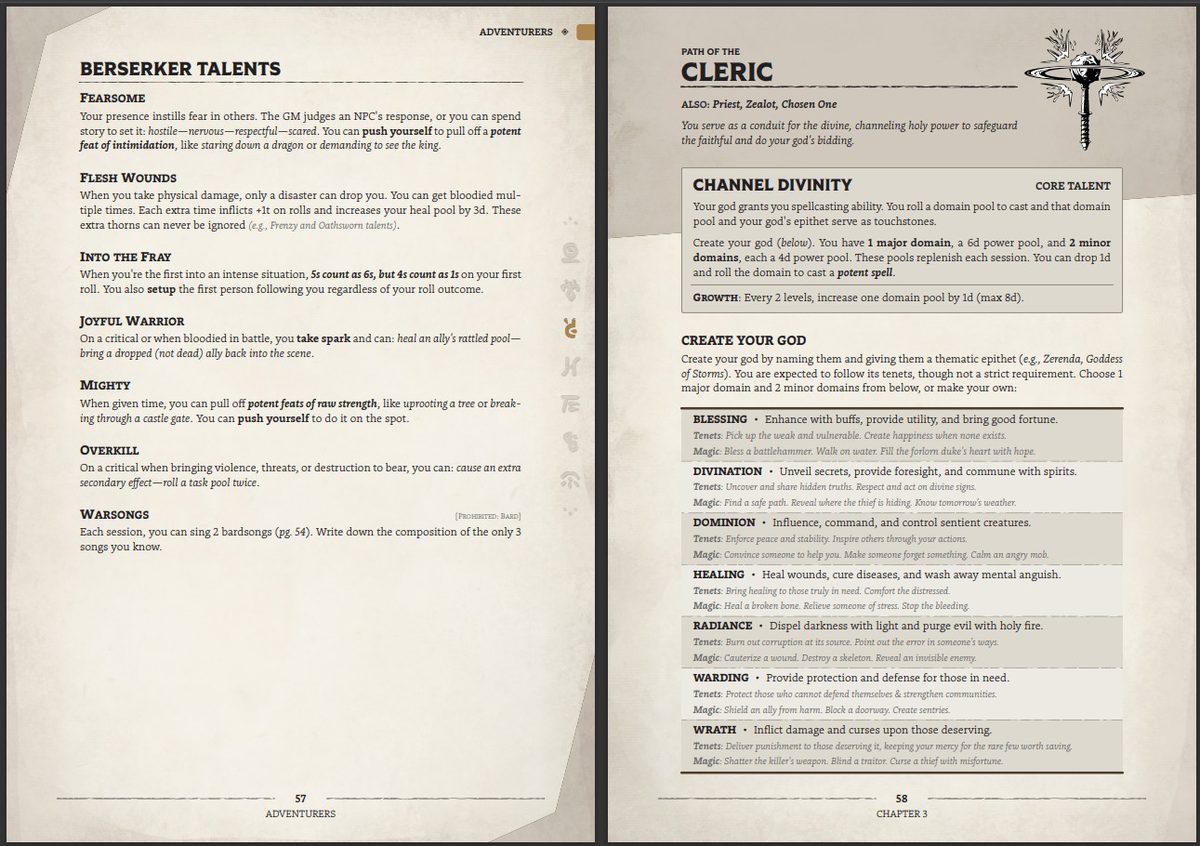
Magic is free form. My sorcerer character knew a few Touchstones. These are the flavours of magic, e.g. cryomancy) and also the types of spells you can use (e.g. Attack, Detect, Move). This works well. I chose to be a specialist of mental magic. I enjoy magic systems that encourage specialisation, because it makes the game system more replayable and heightens the roleplay parts of being a mage.
Great hyperlinks in the PDF. Every page of the PDF has a set of icons that can be clicked on to jump to any other chapter. It is discrete, but very handy.
Defined campaign length. Grimwild characters start at level 1 and the maximum level is 7. The books says that this progression will take 6 months, if you play weekly. This seems perfect to me. (It is possible to slow progression by giving out XP less frequently). I like it when the game has a lower cap on power.
Encourages creativity in your players. Some groups of players have drama majors, who are naturally vivacious with big personalities. Our group of soft spoken introverts is not like that. But even *our* creativity was quickly ignited and we were freed from traditional RPG initiative-based rounds and we began feeding off each other and building creative solutions together.
Simple core system. The core dice mechanic is to roll a small pool of d6, based on one of your 4 stats. Your character usually has abilities that add dice in circumstances that match your strengths. If the task is extra difficult, then you also roll one or more d8s. A simple mechanic is easy to improvise with. A GM can easily give rulings to handle a situation, so the game keeps moving and it is a lighter load on the GM.
Trackers are used for everything. Diminishing Pools are a pool of dice that track progress, by counting down. They are like hit points for a scene or situation. The players describe their actions to overcome the situation, and roll dice, with their successes depleting the tracker pool. The GM can also roll the dice of the tracker to reduce the threat if players succeed in a dramatic action.
Bonds with other PCs. Each character has a described Bond with each other PC. These are descriptors like, "Lowkey Doubt" or "Growing Respect". As these change during play, the PCs take temporary mechanical benefits. So the game encourages players to think about and gradually change their relationships with one another. It works!